
China’s 'Export-First' 2026 Outlook Secures Volume Baseline for Suez Market
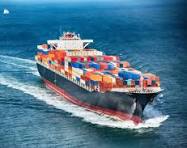
BEIJING — China appears poised to double down on an export-led growth strategy for 2026, a policy stance that secures the cargo volumes necessary for a Suez Canal recovery while isolating security as the sole variable for prediction markets.
Macquarie economists project that Beijing will maintain an ambitious GDP growth target of around 5% for 2026. Crucially for logistics markets, this target relies on a forecasted 6% expansion in exports to offset weak domestic consumption. For analysts forecasting Suez Canal traffic—specifically the probability of container ship transits reclaiming the 2,000 threshold in H1 2026—this confirms that the underlying trade demand required to support such a recovery will exist.
The Volume Equation To reach 2,000 transits in the first half of 2026, traffic must more than double current levels. Since late 2023, Houthi attacks in the Red Sea have suppressed Suez container traffic to an average of roughly 874 transits per half-year, down from a pre-crisis norm of nearly 3,000.
Macquarie’s outlook suggests that China’s "World’s Factory" model provides the necessary supply-side pressure to bridge that gap. A "two-speed" economy has emerged where domestic deflation persists—consumer inflation is near zero and the Producer Price Index (PPI) is expected to contract by 1.8% next year. With internal demand flagging, Chinese manufacturers are compelled to export excess capacity to maintain solvency.
Incentivizing the Shortcut While high export volumes cannot physically clear the Red Sea of security threats, they significantly alter the economic calculus for carriers.
The longer route around the Cape of Good Hope absorbs global fleet capacity. If China aims to hit a 5% GDP target via a 6% surge in exports, the strain on vessel availability will intensify. This increases the opportunity cost of avoiding the Suez Canal. Consequently, any improvement in the security environment would likely trigger an immediate and aggressive return to the waterway to alleviate capacity constraints.
Policy Confirmation Ahead This export-heavy strategy is expected to be solidified later this month during the Central Economic Work Conference (CEWC), a closed-door meeting of top Communist Party leadership. According to Macquarie, policymakers view the export sector—which has outperformed expectations throughout 2025—as the lever allowing them to achieve growth targets with only "limited stimulus."
For the prediction market, the implication is clear: The macroeconomic conditions required to drive Suez transits back toward the 2,000 mark are forming. The outcome now rests entirely on whether Red Sea security stabilizes enough to accommodate Beijing’s outbound push.