
Signal: China’s Offshore Compute Pivot Could Close the Hardware Gap by 2025
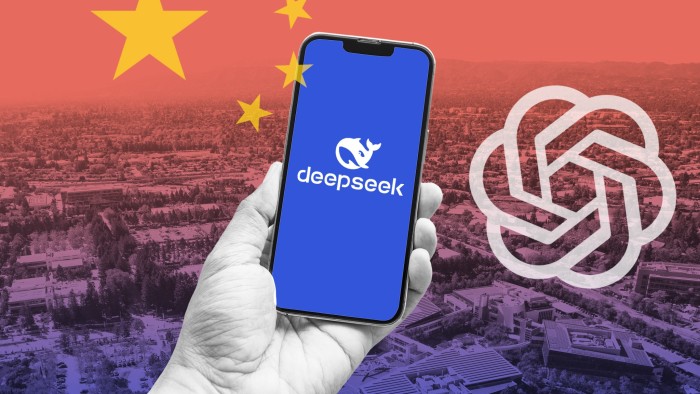
China’s ‘Offshore’ Compute Pivot: Alibaba and ByteDance Secure Top-Tier Nvidia Hardware in Race for Model Supremacy
SINGAPORE — The primary technical barrier preventing a Chinese Large Language Model (LLM) from claiming the top spot on global leaderboards is being dismantled. Major Chinese technology firms, led by Alibaba and ByteDance, are successfully circumventing U.S. export controls by shifting the training of their frontier AI models to data centers in Southeast Asia, securing access to the high-performance hardware necessary to challenge U.S. dominance in 2025.
For market observers tracking the Chatbot Arena leaderboards, this development signals a critical shift: the "compute gap"—often cited as the structural reason Chinese models would lag behind OpenAI or Google—is being closed through offshore regulatory arbitrage.
According to sources with direct knowledge of the operations, Alibaba and ByteDance are utilizing data centers in Singapore and Malaysia to access Nvidia’s most powerful processors, specifically the H100 and H200 series. While U.S. law prohibits shipping these physical chips to Chinese soil, it does not currently restrict Chinese entities from accessing their computing power via the cloud in third-party jurisdictions.
Closing the Compute Gap
The strategic pivot to offshore training addresses the single biggest liability for Chinese developers: hardware inferiority. Inside China, firms have been hamstrung by U.S. restrictions imposed by the Trump administration in April 2025, which targeted even the downgraded Nvidia H20 chips designed for the Chinese market.
Domestic alternatives, such as Huawei’s Ascend series or stockpiles of legacy chips, have proven insufficient for training state-of-the-art models capable of dethroning current leaders on the LMSYS Chatbot Arena.
"You need the best chips to train the most cutting-edge models, and this route is legally compliant," noted a Singapore-based data center operator. By moving training workloads to the "Johor-Singapore" corridor, Chinese tech giants are effectively replicating the infrastructure available to Silicon Valley labs, removing the hardware handicap that has historically capped their model performance.
The Regulatory 'Pincer'
The acceleration of this offshore strategy is a response to a "pincer movement" of regulations that has made domestic training untenable for private tech giants.
Domestically, Beijing has intensified pressure on companies to "buy local." As of late November 2025, regulators reportedly barred ByteDance—which purchased more Nvidia chips than any other Chinese firm this year—from deploying foreign silicon in new domestic data centers, mandating a shift to processors from firms like Cambricon.
Simultaneously, Washington’s April 2025 restrictions created "policy whiplash," casting doubt on the future availability of even mid-tier chips like the H20. Faced with a domestic ban on foreign hardware and a U.S. ban on exports, the move to "neutral" Southeast Asian hubs allows ByteDance and Alibaba to bypass both Beijing’s autarky mandates and Washington’s containment fence.
Implications for 2025 Leaderboards
With capital expenditure in Southeast Asia spiking over the last quarter, Chinese labs are now training on infrastructure at parity with their Western counterparts. This timing is critical for the prediction markets. Given that training runs for frontier models typically span several months, the current offshore activity suggests a wave of high-parameter Chinese models will reach maturity in the second half of 2025.
If the hardware bottleneck is effectively removed, the competition for the #1 Arena score shifts back to algorithmic efficiency and data quality—areas where Alibaba (Qwen) and ByteDance have already demonstrated world-class capability. This significantly shortens the odds of a Chinese model taking the top spot before the year ends.