
China Threatens "Crushing Defeat" as Missile Deployments Push East China Sea Toward Kinetic Conflict
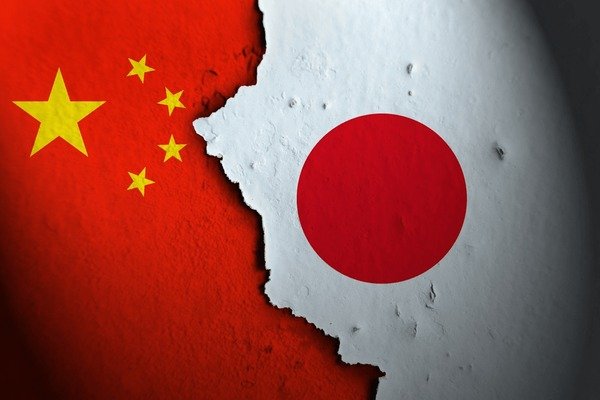
TOKYO/BEIJING — The probability of a kinetic event in the East China Sea has spiked following a severe escalation in rhetoric from China’s Ministry of National Defense, which warned Wednesday that Japan will face a "crushing defeat" if it maintains its current strategic trajectory.
The statement targets Tokyo's refusal to retract Prime Minister Sanae Takaichi’s remarks regarding the defense of Taiwan, as well as confirmed deployments of Japanese surface-to-air missiles to Yonaguni Island. For analysts monitoring the "China x Japan military clash before 2027" market, Beijing’s language marks a critical shift from diplomatic protest to active threat signaling, explicitly framing Japanese intervention as an act of aggression justifying "resolute self-defense."
The "Red Line": Legal Groundwork for War The current standoff was precipitated by PM Takaichi’s November 21 assertion to parliament that a Chinese attack on Taiwan could trigger Japan's right to collective self-defense. Following Tokyo’s November 24 rejection of a demand to retract the comment, Beijing escalated its legal maneuvering.
China’s envoy to the United Nations has formally argued in a letter to the Secretary-General that Japanese involvement in a Taiwan Strait conflict would constitute aggression. By invoking the UN Charter’s self-defense clauses, Beijing appears to be establishing a legal predicate for the use of force against Japanese assets.
Flashpoint: The Senkaku Distinction The risk of physical contact is highest around the Senkaku (Diaoyu) Islands, where the separation between civilian law enforcement and military engagement is blurring.
As of November 20, Chinese Coast Guard (CCG) vessels—operating under the Central Military Commission—have entered contiguous waters for six consecutive days. Reports indicate at least four are equipped with machine guns.
This creates a volatile asymmetry. The CCG is a military entity; the Japan Coast Guard (JCG) is a civilian law enforcement agency. While a skirmish between the two is dangerous, it may not immediately constitute a "military encounter" between two armed forces. The true danger lies in escalation dynamics: if the CCG overwhelms JCG assets, Japan would be forced to deploy the Maritime Self-Defense Force (JMSDF), crossing the threshold into direct military-on-military conflict.
Airspace Friction and Missile Deployments The window for miscalculation is also widening in the air. Japan’s Air Self-Defense Force scrambled fighters on November 25 and 26 to intercept suspected Chinese military drones operating between Yonaguni and Taiwan.
Simultaneously, the confirmation that Japan is deploying Type 03 Chu-SAM medium-range surface-to-air missiles to Yonaguni—110 kilometers from Taiwan—has drawn ire from Beijing, which labeled the move an "extremely dangerous" attempt to instigate confrontation.
Outlook: Off-Ramps Closing Diplomatic buffers are failing. Chinese Premier Li Qiang has ruled out bilateral meetings with PM Takaichi, and military-to-military exchanges have been halted. With Beijing moving heavy weaponry into contested zones and explicitly warning of a "bloody nose," the region is entering December 2025 with the lowest threshold for kinetic conflict seen in recent years.